October Morning

“On this day three years ago…” an innocuous push alert read. Truth be told, I love looking through the memories on my phone. I’ve even managed a thousand-day streak—one of my greatest commitments in a life increasingly governed by technology. For all the unwanted influence my phone and social media have rooted in daily life, this small ritual—a brief glimpse and reflection into a life so loved, so coveted, so lived—is one of the few digital habits I truly cherish.

And on today’s small scroll down memory lane, there she was: big bright eyes, high rosy cheeks, smiling back at me. A quick snap of a couple at a makeshift drive-in on a mild October night in Blue Island, just starting to find their way. Texas Chainsaw Massacre was on the screen, and life was so simple. At least relatively so. I stared at that girl, and I missed her with every piece of me.

I sat and studied that photo, finding it hard to believe she was ever me, let alone only three years ago. My heart breaks for the couple in the picture, and for all that the smiling face next to mine has had to endure. It hasn’t been easy for him, either. I haven’t been easy.

So many plans and so much potential live inside that one photograph, that single moment in time. Plans and potential that would fade into the background months later, when a few words spoken in a hospital room sent that life veering drastically off course. Do they still exist? I am so desperate to claw my way back to them, to that moment, to that girl. And I try every day, but it is so, so hard.

I don’t even look like her anymore. Contrary to popular assumption — or at least my own — I gained weight after my cancer diagnosis. I suppose three major surgeries in less than a year could do that. It isn’t uncommon to hear of weight gain after a nephrectomy. Combine that with rounds of steroids, various medications, autoimmune disease, and inflammation, and it’s easy to see the change. Everyone tells me not to worry, not to feel bad: you’re still beautiful. “It will come off,” they say. And slowly, it is. But explanations feel like excuses when you no longer recognize yourself in the mirror.

My abdomen is littered with scars and bruises that, even eighteen months later, never faded. My stomach is shaped differently now. And it still hurts almost every day. Scar tissue and pulling at the sites of old incisions, strange sensations in the area my kidney used to be. Sometimes an ache after a day of increased physical work, sometimes a sharp snap when moving in a way previously unregistered. 

“Remission,” as they say – as though it means this is all in the past. Or, as those of us who live here understand, “no evidence of disease.” Except the evidence spreads across our bodies and through our minds daily, even as we learn to live with it. Grateful the cancer is currently, and hopefully permanently, at bay, yet far from the picture of healed and healthy the world seems to expect us to be.

In the course of a few hours my body became a landscape I no longer understood. Medications affect me differently, foods affect me differently. I had to re-stabilize my blood thinners which took months of constant tests and so many tears born of frustration. I had to change my immunosuppressants, start biologics, readjust my thyroid medications. Strangely I’m allergic to things I’ve never been allergic to before. And I am tired. So, so tired. It takes me days to do what used to take an afternoon.

And so I miss what was. The body I used to understand. The face I still recognize more than current reflection depicts. The hopes and dreams and plans of an expected life. And so I desperately try to claw my way back there. Each clear scan another hesitant hope. 

I’m learning what works, albeit slowly. It might take a few days to do what used to take an afternoon, but I’m getting it done. Long gone are the days of crash diets and gimmicks; I’m learning instead to welcome new patterns of sustainability (though the snail’s pace of loss frustrates). I’m trying so hard to find my way, even as I struggle to handle the inevitable setbacks. Patience is a virtue I only possess until I don’t, it seems. But I am trying so very hard. I’ve never failed, and I promise I won’t. So bear with me. Things are messy, I know—but they’re also still beautiful, even when I don’t always feel it. I’ve found new hobbies, new interests, new joys. I’m excited about what’s to come, and I’m constantly setting goals. I’m ready to do this. I want to do this. I want every scrap of who I was that remains to be reclaimed—and I want more.

But sometimes, on a cold Wednesday morning, an innocuous push alert to a brief moment three years ago sets you back. And that’s okay.
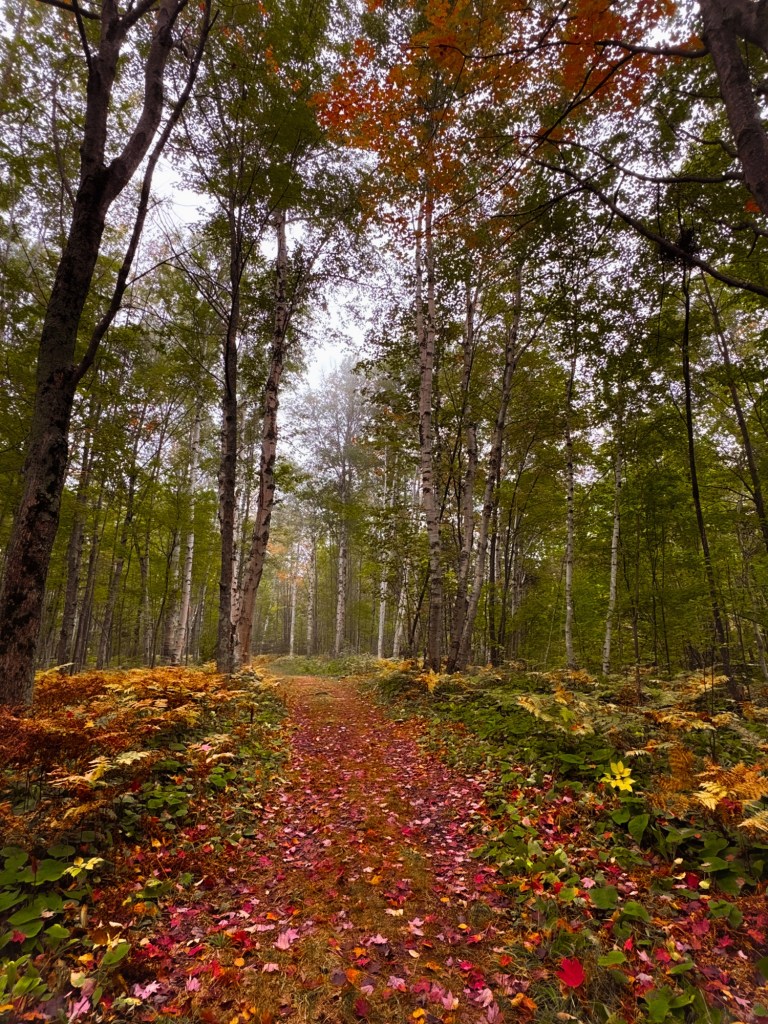
A Life Left Behind

I was angry when they told me I had cancer. It wasn’t the emotion I would have expected upon receiving that diagnosis, but then little about the past year could be considered such. I wish I could say that my anger had a rational target, but I was just mad — How dare they say such a thing to me? Surely it couldn’t be true. I was there for a complication from an ankle reconstruction, not a six-centimeter tumor in my kidney. I have lupus; we’ve closely monitored my kidneys and bloodwork every few months for years. How could I have cancer exactly where we’d been looking all this time? That felt particularly cruel — watching my kidneys for so long against one threat, only to have cancer slip in through the back door and take one.

Over the next few hours locked in that tiny emergency-room cell (quite literally — the hospital was swamped that night and they were using psych hold rooms as overflow), I seemed to move through the stereotypical stages of grief at a rapid pace. I bargained and pleaded with the people moving about the room. I explained I was only forty-one and had two kids still in school. I spoke my children’s names as if they might elicit sympathy from the powers that be to change things. I repeated their names as if they could finally convince the medical team to magically fix this and let me go home — back to my boys, back to my old life. I blamed myself. I called my mother. I cried. And in the end, I accepted the moment with one caveat: if I had to have cancer and had to be admitted, then at least give me something good to knock me out.

Unbeknownst to me, I would return to that grief — that personal, awful hell — many more times in the months that followed. I suspect I will always grieve the life I left behind that night. As time passes, it comes and goes with proverbial, unpredictable tides. Sometimes it settles quietly just offshore — long enough to almost, but never fully, believe that one day it could pass.

That night was over a year ago now. Today I find myself sitting at the edge of a forest on a cool October evening, listening to two barred owls duet by the glow of a campfire — in what most would call remission — one kidney lighter than before. For the medically minded, I am Stage I T1b clear cell renal cell carcinoma, Grade 3: fifteen months No Evidence of Disease (NED) following a radical right nephrectomy, complicated by lupus and lifelong anticoagulation for antiphospholipid syndrome.

But as those of you who have walked this road know, I am still in the unknown — balancing fear and grace, learning how to move forward on a path I no longer recognize. While I physically sit on the edge of the woods as I write, mentally I still find myself in them, waiting to see if the treatment worked — if we truly did find the cancer in time. It’s a story only time can tell, unfolding in radiology reports and medical acronyms every six months.

Being diagnosed with cancer made me realize just how little I knew about it — and just how much media, particularly social media, gets it wrong. I’ve struggled not with the absence of inspiration or positivity in “my journey,” but with the expectation that I should find them there. I’ve felt like a failure because I don’t feel brave or strong, and I definitely don’t feel like I’ve “got this.” I’m terrible at support groups, and I’ve faced depression and anxiety — I still sit with them from time to time.

Cancer — contrary to my previous belief — has been one of the loneliest experiences of my life. Learning that it’s okay to grieve what I lost differently, to process this trauma in reality and fact, to be scared, and to contemplate and make peace with my own mortality has been the necessary catalyst for rebuilding a beautiful, full life — one filled with new adventures, hesitant hopes, and fragile dreams. One that I’m grateful for every day.

Somewhere between a lump, a feeling, a scan, and a diagnosis, your life takes a new path. Regardless of outcome, you are not the same person you once were, and a new life — a second life — begins. It’s hard, stepping away from what was and coming to terms with what is. It’s hard rebuilding while knowing how it feels to have the floor drop out from under you — knowing you’re always one scan away from it all happening again. But stepping forward alongside that fear is its own kind of strength. I suppose I hope turning to an old friend — words on a page — will help me find mine.

After they placed the IVs and filled out the paperwork that night months ago I was brought up to my room. My mom settled on the couch below the large, dark windows to sleep. A kind nurse sat with me for a moment, and the meds I’d negotiated earlier — per the terms of “acceptance” — were administered. It was the end of April and a spring storm rumbled and flashed outside in the early morning hours. I lay in the bed, staring into the dark, listening to the wind and rain, thinking about how much I would have enjoyed those sounds if I were home — if none of this were happening. The rain and thunder rumbled on for hours as I sat and missed what should have been. The next night they gave me something stronger, but I still didn’t sleep.